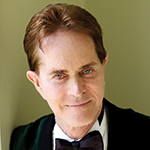

Alec Wilder,
Iconoclastic Musical Genius,
and His Faithful Friends
By Mark Walter

The breadth and depth of his musical creativity has led to Alexander Lafayette Chew Wilder (known to all as Alec Wilder; 1907-1980) being aptly, and also vacuously, described as “an unclassifiable American original.” Why aptly so? Because each of these three terms certainly apply to Wilder as an artist, and arguably also as a person. Why vacuously so? Because, whether singly or in combination, these appellations are utterly inadequate to describe either the man’s talent or his eccentricity. The simple fact is that Wilder’s artistry intrinsically eschews labeling or categorization, as did Alec himself.

Indeed, Wilder would likely be amused by what he would perceive as the phrase’s polysemantic and tautological nature. If he was an “original,” was this what made him “unclassifiable?” Or was he “unclassifiable” precisely because he was an “original”? Perhaps the only element of the phrase that he would readily accept as being applicable to him is the term “American”, although he would probably also point out how meaningless, and meaningful, such a label could simultaneously be.
In his liner notes to my father’s, composer and pianist Cy Walter’s, 1956 Atlantic Records Rodgers Revisited, Wilder himself decried any such effort to “categorize” Cy’s artistry, since, in Wilder’s own words, he “believe[d] labeling and pigeon-holing to be impertinent.” Instead, Alec, at that juncture a friend and musical colleague of Cy’s for two decades, proceeded to share his own specific convictions as to Cy’s excellence musically; and then to explicitly reject attempts at labeling him either “a society-piano player”, or to instead “obliquely imply that he is not a ‘jazz piano-player’.”
And then Alec delivered his death blow to any such classifying of Cy, in words that are equally pertinent to Wilder himself: “Well, if you insist, he isn’t the latter, but neither is he the former. He is first, last, and always a devout and dedicated musician.” Now there’s labeling that echoes through the decades, equally apposite to both. Amen, Alec, Amen!

Prolific in his composing (which he would do anywhere, at any time, on any scrap of paper at hand), Wilder crafted beautiful works that permeated across all established musical genres. The authoritative Alec Wilder: A Bio-Bibliography by David Demsey and Ronald Prather, written with the assistance of musicologist Judith Bell (Greenwood Press, 1993; hereafter Bio-Bibliography), chronicles some 248 compositions in chronological order across Wilder’s over half-century career, exclusive of individual songs; these are separately listed as 331 popular songs, and 117 art songs.

Some 695 musical works are detailed in total, with discographical listings relevant to Wilder and his music numbering 368, and similar bibliographical listings (books, articles, reviews, biographical entries, and obituaries) counting in at 408. There is even a listing of ancillary materials, categorized as Alec’s unpublished writings; music manuscripts and copies; sketches; miscellaneous documents; and National Public Radio programs. Collectively, there are 111 of these ancillary materials entries, all, as with everything else in the Bio-Bibliography, providing admirable detail as to the provenance and content of the individual items. And in an estimable boon to researchers, items throughout the work are cross-referenced for their interrelatedness from category to category. The ultimate outcome of David’s, Ronald’s, and Judy’s efforts is an archival triumph.
More Wilder creations surface all the time, for Alec freely and frequently wrote pieces for friends, and particularly for friends’ children, of whom he was quite fond. Consequently, even decades after his death, Wilder’s oeuvre expands; one suspects that it will probably never be fully catalogued. Continually performed and enjoyed, yes; but it may be many a decade before its full parameters can be considered comprehensively limned. Prodigious though he certainly was, numerosity alone is
inadequate to portray the diversity of Alec Wilder’s creations. The Bio-Bibliography’s chapter listings assembling his “Works and Performances” provide separate groupings of them in the following musical genres: orchestral music; solo instruments with orchestra; band (wind ensemble) music; solo instruments with band; orchestrations and arrangements; film scores; chamber music; music for solo instrument; keyboard music; popular songs; musical theatre; art songs; operatic and dramatic compositions; ballet music; and music for children. And these somewhat arbitrary classifications fail to convey how Alec’s musical compositions miraculously meld elements of jazz, chamber music, and popular melody. Only by hearing them, live or on record, can one truly experience this paradigmatic coalescing.
Perhaps most famously illustrative of this aspect of Wilder’s musical genius are the historic recordings of his Octets, organized by Mitch Miller beginning in 1939. To these individual works Alec appended colorful titles, including “Sea Fugue, Mama”; “Neurotic Goldfish”; and “Bull Fiddle in a China Shop.” The Octets’ unique appeal also helped catalyze Frank Sinatra’s 1945 Columbia Records album of Wilder’s works for solo winds with string orchestra, Sinatra Conducts Alec Wilder. The role of conductor was a novel one for Sinatra, but the outcome nonetheless excellent, in large measure due to the enthusiasm he inspired amongst the orchestra’s members.

As related in the excellent work Sessions with Sinatra: Frank Sinatra and the Art of Recording by Charles L. Granata (Chicago Review Press/A Capella Books, 2004), at pages 49-50, Sinatra readily “explained to the assembled musicians that he knew he was not a conductor and was simply asking them to be cooperative in following his lead because he believed in the music and wanted to bring some commercial attention to it.” And that support by Frank for his friend Alec’s artistry continued over the decades, with Wilder’s last song composition, “A Long Night” (1980; lyrics by Loonis McGlohon), being written in response to
Sinatra’s request for a “saloon song.”

Wilder’s scholarly renown also arises from his iconic American Popular Song: The Great Innovators, 1900-1950 (edited, and with an introduction, by James T. Maher; Oxford University Press, 1972). In it, Alec brilliantly surveys the works of principally all of the major popular song composers of that era, with his own excepted. No exaggeration or hyperbole exists in stating that Alec’s American Popular Song has been considered the definitive discussion of the genre ever since its initial publication. Indeed, this book is so highly regarded that its original publisher, Oxford University Press, published a third edition on the occasion of its 50th Anniversary (edited and revised by Robert Rawlins; 2022); and it also inspired an excellent supplemental sequel, Classic American Popular Song: The Second Half-Century, 1950-2000, by David Jenness and Don Velsey (Routledge, 2005).

In the same year as the publication of Alec’s seminal book, PBS released a terrific television special, An Evening with Mabel Mercer, Bobby Short, and Friends. The hour-long focus on these two stellar performers of American popular song included several guests in an elegant living room setting as Mabel and Bobby worked their magic. Alec, along with my terrific mother, Cam Walter; the superb pianist-singer Buddy Barnes; composer Bart Howard; and several others were among those friends participating.

Participants in 1972 PBS-TV Special
An Evening with Mabel Mercer, Bobby Short, and Friends
Top row (L-R): Dick Sheridan (drummer), George Frazier,
Alec Wilder, Bart Howard, and Willa Dene Musti
Center: Bobby Short
Bottom row (L-R): Beverly Peer (bassist), Buddy Barnes,
Mabel Mercer, Cam Walter (widow of pianist Cy Walter), and Billy Roy
A 1976-1977 collaboration by Alec with pianist and composer Loonis McGlohon followed, with the two hosting the very successful forty-episode National Public Radio American Popular Song series. Each hour-long show featured a prominent guest performer, and focused upon key aspects of the genre. With the generous assistance of Judy Bell and David Litofsky, both longtime Alec fans, I was able to amass recordings of all of these shows, and a treasure they are. (I am happy to share these, gratis, to those interested in hearing them.) The song performances alone are gems to be savored, and the frequent colloquies between Alec, Loonis, and the guest performers proffer a fascinating musical master class for both the American Popular Song initiate and aficionado.

But though Alec was highly regarded for his musical prowess and creativity by his peers, commercially successful, in the classic economic or fame-driven sense, Wilder was not. Nor was it his goal in life to be; instead, he sought to create the finest music he could, popularity on the music charts be damned. He even oft thumbed his nose at the conventional musical authorities; in one instance, in a pique against the censors who banned what were deemed to be offensive songs from the radio broadcast airwaves, he penned a song titled “If You See Kay.” It successfully slipped past the censors; that is, until, upon its initial airing, listeners called in to complain. And doubtless Wilder’s practical ability to follow his muse was eased by his being able to live relatively comfortably on a family inheritance. He made his longtime home the famed Algonquin Hotel in New York City, though his lifestyle was a decidedly peripatetic one. He loved train travel, spontaneously embarking on a rail journey to whatever destination struck his fancy, while in so doing often acquiring new acquaintances, and happily composing along the way.
Although such was facilitated by his favorable financial circumstances, even Alec acknowledged his eccentricities. As he once wrote in one of his letters,
“Though I don’t feel the least bit freakish, I suppose that, to the most understanding, tolerant people … I must seem distinctly odd. I keep forgetting that I do few of the things which constitute conventional living. I don’t go to the theatre, concerts, movies, parties. I don’t look at television or listen to radio. I have no property or stocks or insurance, I have no family but a niece and a nephew I never see and a brother to whom I am as close to as to a mild-mannered short-order cook. I see no friends constantly, only when I’m in their city … I have no memorabilia, clippings, reviews, photographs, records, printed or manuscript music. I keep only the letters of one man. I refuse to contemplate the past or the future. I have no plans, ambitions, or infatuations … I assume that the worst is likely to occur at any moment and therefore celebrate not so much feeling well as not feeling sick … Since I have reduced my needs and interests to a minimum, there will be that much less to die.”
Eccentric indeed! The above is an excerpt from the 31 July 1981 program for the Alec Wilder Tribute held shortly after his death at Rochester’s Eastman School of Music. The show featured jazz pianist Marian McPartland, a dear friend and musical colleague of Alec’s, and noted singer Susannah McCorkle. Largely self-taught, Wilder’s early studies at Eastman comprised his most significant formal education, though not resulting in any degree until his receipt therefrom, late in life, of an honorary doctorate.

And yet in the pithy closing phrase of that above passage by Alec is an ironic spotlight on the enigma he remains, on what is the forty-fifth anniversary of his death: “… there will be that much less to die.” What is astounding to me, and doubtless to so many others, is just how irrefutably so much of Alec Wilder still lives.
A comprehensive biography of Wilder can readily be found elsewhere, done much better than ever I possibly could. In this regard, I refer you to the excellent discussion by David Demsey and Ronald Prather in their Bio-Bibliography, at pages 3-30. And in many respects, the rich musical legacy that Wilder has left us certainly speaks for itself, and provides many insights into Alec as a person.
David Demsey has recently expressed how the Bio-Bibliography is one of his proudest accomplishments, observing that its extraordinarily detailed and researched listings (which comprise almost 225 pages) are now a go-to resource for the discovery by today’s musicians of Alec’s creations. And there can be no question that the existence of this terrific resource has immeasurably contributed to keeping Alec’s music vibrantly alive during the over three decades since David, Ron, and Judy so impressively crafted it, and will certainly continue to do so for generations to come.
Yet there is another facet of Alec’s legacy that I wish to highlight, and that is the extraordinary devotion to the man, and to the man’s creations, that this eccentric artist has inspired—not only during his life, but continuing still to this day, forty-five years after his death of lung cancer in Gainesville, Florida on Christmas Eve, 1980. And I seek to do so largely through relating my experience as part of an astonishing organization, The Friends of Alec Wilder (hereafter “FOAW”), in which I have been privileged to be a member over the course of the past two decades.
I characterize this organization as “astonishing” because I marvel not only at what it has accomplished over the course of the four decades of its existence, but also at the caliber and quality of the individuals who comprise it. Indeed, the very fact of its continuing existence is a vibrant testament to how far-reaching the impact of Alec’s life was, and continues to be.
The Friends of Alec Wilder was initially organized as a New York not-for-profit corporation in 1988 (with federal 501(c)(3) status recently accorded it). Its principal stated purposes are “to generate and support activities and projects which increase public awareness of the spirit and creative genius of Alec Wilder and which perpetuate his lifework”; and to specifically accomplish such through conducting archival efforts and annual concert performances, along with the publication of a newsletter on Wilder’s legacy. The five initial directors were Thomas M. Hampson; Robert Levy; Helen and Louis Ouzer; and
Harvey G. Phillips.
All of these directors, save for Robert Levy (who has always been, and very much remains, an active FOAW member), are now deceased. A decade ago, the organization was restructured by the two surviving initial directors, Tom Hampson and Bob Levy, to be reconstituted with a new Board Of Directors having eighteen members (of whom I am privileged to be one), and an advisory board having sixteen more. The organization is, and has always been, sustained by volunteer efforts. There are no employees or administrative offices. Donations are welcomed, and tax deductible to the full extent of the law. They can be made through the FOAW’s website, alecwildermusicandlife.com.
Besides supporting extensive archival efforts at The Eastman School of Music, where Alec’s materials principally now reside, the FOAW’s energies have consistently been directed to holding an annual concert of Alec’s music. These concerts, performed in New York City, have transpired for each of the past 39 years, commencing in 1985; and the 40th Annual Concert is being held on 8 November 2025 at the terrific venue 54 Below. Its focus will be Wilder’s popular songs.
The wonderfully talented performers at these annual concerts are far too legion to detail here, but each concert has had a designated honorary host. Included among these many luminaries, chronologically speaking, have been Gunther Schuller; Mitch Miller; Harvey Phillips; Robert Freeman; John Garcia Gensel; James T. Maher; Louis Ouzer; Manny Albam; Thomas M. Hampson; Loonis McGlohon; Eileen Farrell; Jackie Cain; Roy Kral; David Demsey; Robert Levy; Judy Bell; William Engvick; Ann Holliot; Ronald Prather; Rex Reed; John Marcellus; John O. Biderman; Marlene VerPlanck; James Gavin; Joe Wilder; Aaron Gandy; Rob Geller; Jon Weber; Bill Charlap; Brian Carpenter; John Carlson; Eric Comstock; David Amram; and Steve Ross. The host for this year’s 40th Annual Concert is Charles L. (“Chuck”) Granata.

The amazing dedication and contributions of so many people over the past forty years in keeping Alec’s music alive is itself a reflection of the beauty and potency of this unique artist’s creations. My association with FOAW has been for only the latter half of this period, and so I cannot speak to the participation of many of the earlier individuals involved. But as to the others, I wish to convey both how fruitfully they have fueled FOAW’s mission, and how significantly these friends have enriched my life.
Space being limited, my discussion of these highly accomplished people is of necessity cursory, and it neither includes many whom I could justly name, nor adequately describes the colorful achievements of which these talented friends could most certainly boast. Yet I believe even this truncated listing will well illustrate the impressive caliber of people Alec Wilder’s artistry has, amazingly, brought together. And one of the biggest boons of being involved with the Friends of Alec Wilder, personally speaking, are the wonderful friendships it has fostered: yes, we are Alec’s Friends, but we are also, without question, Friends with each other.
For many years musicologist and archivist extraordinaire Judy Bell (who passed away in 2021 and is sorely missed) worked with Alec’s music publisher, The Richmond Organization (“TRO,” now TRO/Essex Music Group). She also held a key role with FOAW, and in 2004 I reached out to her in the hopes of finding an extremely rare copy of the published sheet music of one of my father’s, Cy Walter’s, beautiful compositions. The piece is “Time and Tide,” and Cy wrote the music, with Alec Wilder having written the lyrics. I told Judy that my family’s copy had been lost, and that extensive efforts to find another had been fruitless. I asked her to check TRO’s and Alec’s archives in the hope that this elusive sheet music might be found in them
Judy in fact found a single copy in TRO’s files, and promptly gifted it to me. She noted that TRO did not publish it, and thus why it was to be found within TRO’s archives was a mystery. She theorized that Alec’s longtime lyricist and friend, the wonderful William Engvick, had given it to TRO. Due to Judy’s diligence and generous spirit, “Time And Tide” is thus no longer lost, and has since been repeatedly performed. It is included, for example, in this year’s 40th Annual Concert, as recreated by the superbly talented artists Marissa Mulder (vocals) and Jed Distler (piano).

Though Judy has sadly left us, TRO/Essex Music Group’s unflagging support of FOAW’s mission continues through the generous efforts of its chief executive, Kathryn Ostien. Kathy’s innovative contributions as a Board member have included pursuing avenues for significantly, and creatively, augmenting awareness of Alec’s legacy. Her support has been invaluable, and her able stewardship of TRO’s Wilder archives and publications ensures that Alec’s creations are both accessible and carefully maintained.
When I initially reached out to Judy Bell in 2004, she also advised me of the existence of the Friends of Alec Wilder, and invited me to its annual concert. As it happened, it was then being held the very next weekend, at Symphony Space in Manhattan. That year’s event included the performance of several song pieces of Alec’s music to which lyrics had never been written; that is, not until Bill Engvick (1914-2012), who was then ninety, delightfully did so. And so his and Alec’s newly-merged creations were joyously heard as performed at that Nineteenth Annual Concert of Alec Wilder’s music. And my attendance at that event likewise catalyzed my joining the Friends of Alec Wilder, another wonderful gift given me by Judy Bell.
At this 2004 event I also met Tom Hampson, a Rochester-based attorney and longtime jazz radio host, and his wife Zena, both of whom died in 2016. Tom was a passionate music lover whose radio shows, beginning when he was a student at Cornell in 1947 and extending continuously to his death, served as both an educational vehicle for all, and likewise as a launching venue for many young musicians. A longtime friend of Alec’s, Tom played a critical role in not only founding the FOAW organization, but in producing its annual concerts and in ensuring the preservation of Alec’s musical legacy.
Besides co-authoring the Bio-Bibliography, Ronald E. Prather, another early FOAW member whose career as a computer scientist included insights that helped fuel the Internet’s creation, wrote a brilliant article entitled The Popular Songs of Alec Wilder (published in Oxford University Press’ The Musical Quarterly, Vol. 74, No. 4 (1990), at pages 521-549). As discussed above, Alec’s seminal American Popular Song: The Great Innovators, 1900-1950 was comprehensive in its discussion of the great composers of the genre, save for one, that being Alec himself. Ron’s study of Alec’s popular song creations is an explicit and most successful effort to bridge that gap. Sadly, we lost Ron earlier this year, with his passing keenly felt by his FOAW colleagues.
Bob Levy, a founding director of the FOAW, initially knew Alec as a mentor. Their deep friendship began when Bob was studying at the Ithaca College, early in Bob’s career. That career has indeed been a rich one, with four decades as a professor of music, principally at Lawrence University in Wisconsin; and as a trumpet soloist, a conductor, composer, and recording artist. Bob has interviewed dozens of people as part of an ongoing film documentary project on Alec’s life. Having long held the role of FOAW’s President, Bob is now President Emeritus of the organization.
As noted above, David Demsey, likewise a wonderfully talented musician who recently retired after teaching for thirty-three years at William Patterson University (“WPU”), co-authored the Bio-Bibliography with Ronald Prather. His knowledge of all things Wilder is certainly unparalleled, and David continues as Professor Emeritus of Music and Coordinator of Jazz Studies at WPU. In a 1999 article written for the WPU student newspaper, The Beacon, David opined that “the best teachers are the people who don’t draw a line between classical and jazz, music and life”—an assertion with which Wilder would surely concur. David has also extensively performed Alec’s musical creations, and will be doing so at this year’s FOAW’s 40th Annual Concert.
John Carlson, FOAW’s President, is a musician performing extensively in the New York City area and nationally. A jazz trumpet soloist, composer, and teacher/clinician, John has achieved international recognition through tours and recordings made with an extraordinary array of famous artists, far too numerous to list here. He has been involved with the organization and with Alec’s music for well over two decades, and has ably led the FOAW for several years now, following Bob Levy’s longtime tenure in the role.
The contributions in keeping Alec’s music alive of our Communications Director, Rob Geller, who lives in San Francisco and is also a talented musician and audio engineer, merit especial mention. I say this because Rob, who has a background as a journalist, has, for many years, produced the FOAW’s annual newsletters of events and information relating to Alec Wilder’s artistry. These newsletters are beautifully written, extremely informative, and delightfully designed. Most importantly, they offer Wilder fans worldwide an ongoing forum for finding and enjoying Alec’s music. As with so much else, they can be found on the FOAW website.
Tapping his extensive collection, Rob has also created and maintains a wonderful website of Alec’s musical recordings, wilderworld.podomatic.com. He there shares well over an hundred recordings of Alec’s music, performed by various artists, from diverse records and live performance sources. And Rob has also employed his impressive audio engineering skills in assisting me in preserving rare recordings of my father’s, Cy Walter’s, and others’, musical creations.
Massachusetts-based John Biderman, an ardent music lover who works extensively with not-for-profit organizations, has ably served as FOAW’s Secretary for many years. John’s expertise in information technology and business management have proven invaluable, time and again, in furthering FOAW’s development and in effecting the happy accomplishment of our mission.
Joellyn Ausanka, a longtime editor and executive with Oxford University Press, is the FOAW’s Treasurer. Her rich career with OUP has included working with Alec in the publishing of his seminal 1972 work, American Popular Song, and she brings to our efforts keen insights into both Alec’s music and its historical context.
Other wonderfully talented Friends of Alec include cabaret legends vocalist Barbara Fasano and her husband, pianist-singer Eric Comstock, who have extensively performed Alec’s songs; Mike McGinnis, a New York-based saxophonist, clarinetist, and composer whose extensive performing and recording career over the past several decades has included Alec’s works, among those of many others; John Noel Roberts, an accomplished piano soloist and professor appointed to music faculties around the world (and who has recorded Alec’s piano solos on two albums thus far, and is now working on a third, to be released early next year); Aaron Gandy, composer, music director, performer, and musical event producer extraordinaire; Douglas Colby, avid collector of set and costume designs of Broadway, Off Broadway, and West End musicals; David Litofsky, avid collector and music historian; and Sanford Balick, music maven and domestic relations, maritime, and mediation attorney.
I have here listed only a smattering of the friends who have entered my life through my participation in the Friends of Alec Wilder, and could, if space allowed, list many more. But perhaps bringing this discussion full circle, by closing on how Alec personally enriched my life, is most appropriate. I principally knew Alec as a child, and a young one, at that; my relationship with him did not, unfortunately, include knowing him well during my young adulthood in the years before he died. As noted above, my father, pianist and composer Cy Walter (1915-1968), and Alec were dear friends and musical collaborators. And Alec was also close with my wonderful mother, Cam Walter (1932-2010), and my godmother Mabel Mercer (1900-1984). As a consequence, Alec, Mabel, and many other musical luminaries in my parents’ milieu were frequent visitors to our Manhattan apartment. So much so that, in Alec’s case, my mother referred to him as my “Uncle Alec.”


Cam made this collective friendship concretely apparent in notating a biography written of Mabel, a passage at page 169 of Margaret Cheney’s Midnight at Mabel’s (New Voyage Publishing, 2000). Cheney details Mabel’s moving into her newly purchased rural home in East Chatham, Columbia County, New York. Cheney describes the scene that a new neighbor, Adde vWallin-Beach, saw when she approached the house seeking to introduce herself to Mabel:
Turning off the road, she saw the driveway clogged with cars and trucks. A scattering of sleepy city people wandered around, bewildered … they looked as if they had often heard trees described, but had actually never seen one … As Adde approached, she saw a pale young man in a stiffly starched evening shirt standing on a flatbed truck, studying a refrigerator and a large square piano. Finally, he climbed over to the piano, raised the lid, and began to play Alec Wilder’s “It’s So Peaceful in the Country.” From the house came an answering chorus …

My mother’s note to me on this: “That was your father on the flatbed truck playing Uncle Alec’s song! We came to help—left the city after the Drake Room [in New York City’s tony Drake Hotel, where Cy long performed] closed and arrived in full evening clothes! No problem—most everyone else had the same attire!”
If Uncle Alec and my father were here to opine now, I firmly believe that their common reaction to The Friends of Alec Wilder, and to what the organization has accomplished in the over four decades since Alec’s death, would be one of joyous amazement. For these two singular artists fervently dedicated their lives to the creation of wondrous music, kindling the awed enjoyment and gratitude of so many. And is this not exactly what this unique organization has done, and continues to do?

Although it has not yet surfaced, I hold out hope that one day, a piece of music that Alec wrote for one or more of the children in the Walter home—myself included—will ultimately be discovered. After all, my Uncle Alec loved writing gifts of music for his friends’ children, so I certainly consider it plausible that he did so for myself, and/or for my sisters Victoria and Daphne. And I likewise consider myself superbly placed to learn of that discovery when it happily transpires, for where better for its surfacing to be revealed than amongst the Friends of Alec Wilder?