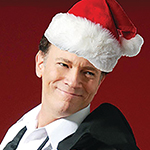

Steve Sieck
Temple of Soul
The Gardenia, West Hollywood, CA, February 28, 2025
Reviewed by Mary Bogue

Photo by Craig Allyn Photography
Here’s this writer’s confession: when something is advertised as a soulful show, my expectations are set rather high for a joyful, deeply empathetic, and transformative journey of music. When Steve Sieck took the stage with three venerable musicians and two other vocalists, he put his backbone into it and mine slipped.
The Gardenia, known for presenting more subdued cabaret shows, might have needed some structural reinforcements after the roof was torn completely off as Sieck attacked it with his fiery opening number (and the title of his show), which he wrote, into the very “Temple of Soul.” The energy in the room was palpable; “everything was good!” and the night had only just begun. He followed that with another of his originals, “That Moment,” his “snapshot in time” with romantic lyrics that recalled his meeting his wife and which also showcased his supreme banter and storytelling. The room was filled with love, and everyone was in love with Sieck for all the right reasons.
He is a masterful lyricist, but he also expertly interpreted “Baby, I’m For Real” (Marvin Gaye/Anna Gordy Gaye), and gifted his enamored audience with a mellow groove on “All I Do” (Stevie Wonder). This masterfully performed show displayed his lovely phrasing, the killer piano groove of Quinn Johnson, the kick-ass bass of Hussain Jiffry, and the perfect rhythm on drums of Kevin Winard. All this was under the direction of Dori Amarilio, Sieck’s music director and a mesmerizing guitarist. Sieck also brought stellar vocalists Amy Keys and Jeff Robinson into play, and together with the band they provided a night of sheer magic. The band wasn’t just accompanying Sieck—they were partners in a journey of sonic bliss.
“Complaint Letters to God,” another Sieck tune, was delivered in true gospel style by powerhouse Amy Keys; she wowed everyone. Jeff Robinson followed with a crave-able and passionate performance of Sieck’s “I Still Want You.”
To bring it all together with a perfect ending, Sieck showcased his song for social change “We Will Find a Way.” This great tune left the elated audience in great spirits, feeling hopeful and joyful. While Sieck wrote “I’m Only Human,” but that premise is doubtful; this kind of genius rarely streaks across our universe. Find his album Crazy That Way on all the usual streaming platforms, and soon your love for his music will enter into your own emotional temple of soul. In a world where virtuosity seems rare, Steve Sieck and his Temple of Soul was a brilliant reminder that true artistry is still alive and thriving.